

Business
Stand up for your Voting Rights: Why Mike Gipson walked out of his Carson Barbershop
What does a visit to a Carson barbershop have to do with the right to vote? At the Black California Conversation in Los Angeles, California Assemblymember Mike Gipson used a personal encounter to connect the sacrifices of voting rights advocates with a question that matters to every new generation of voters: What will we do with the right they fought to secure?

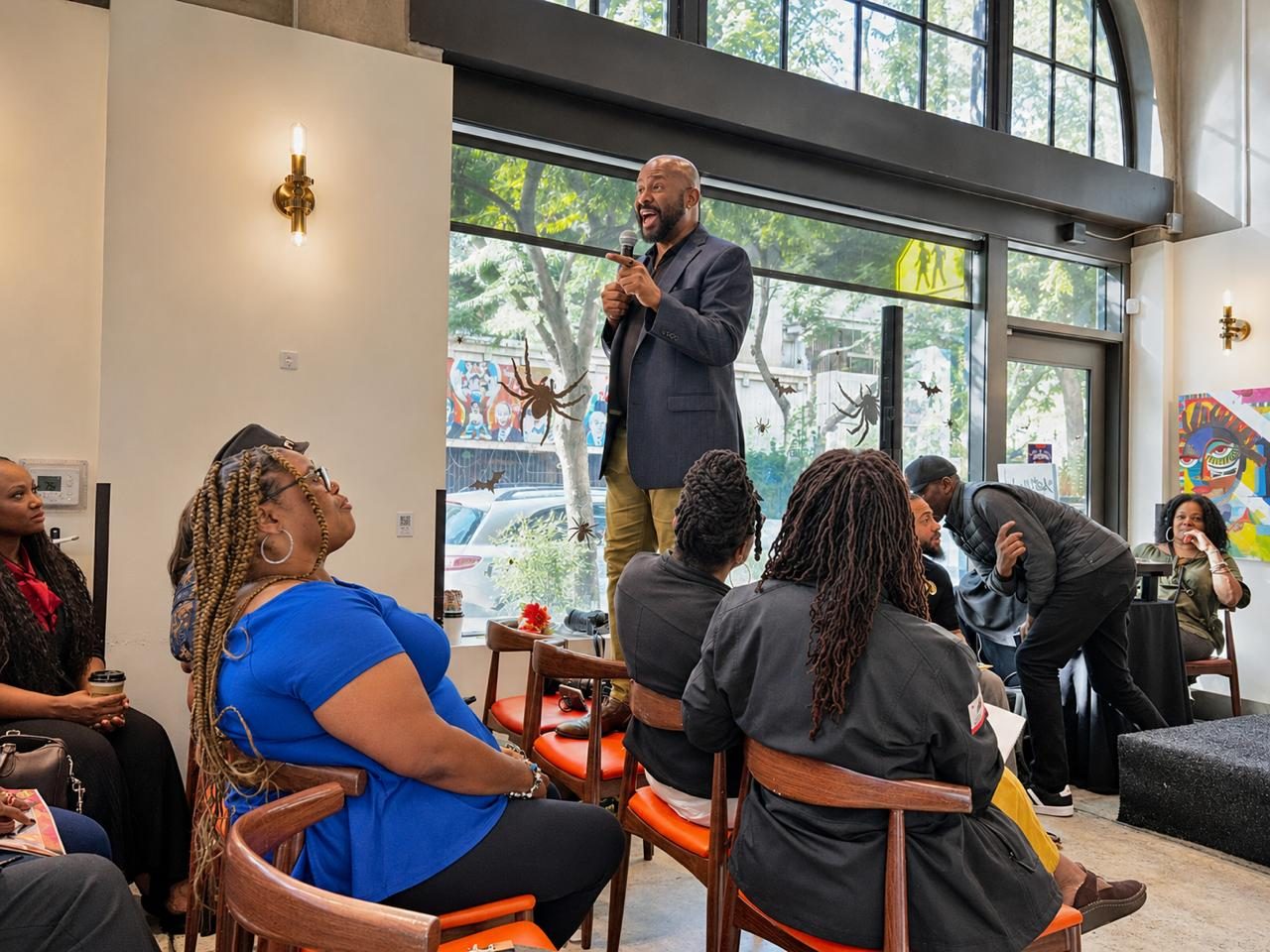
At the Black California Conversation in Los Angeles, the California lawmaker made the case that casting a ballot carries the weight of what earlier generations endured to make it possible.*
Dr. Marie Y. Lemelle, MBA, PhD
California Assemblymember Mike Gipson went to his Carson barbershop to get his beard lined up. As he often did during a visit, he asked who was registered to vote. The shop owner gave him an answer that ended the appointment.
“I’m registered to vote. I don’t vote.”
Gipson took off the barber cape and walked out. When he told the story on Oct. 24 at “Power, Protection & The Path Forward: The Black California Conversation,” held at Delicious at The Dunbar in Los Angeles City Council District 9, he made clear that he was prepared to take his business elsewhere. “It’s that serious for me,” he said.
Gipson, a Democrat from Carson, represents California’s 65th Assembly District and is a member of the California Legislative Black Caucus. He told the audience he spent nearly a decade in Carson city government, including time as mayor and mayor pro tem. His name was on the Nov. 3 ballot as a candidate for District 3 on the California State Board of Equalization, a state tax board. The district covers Los Angeles County and surrounding areas.
What Gipson asked voters to remember
Gipson acknowledged that he was running for office, then reached back to a time when Black Americans could be forced to pay a tax or pass a literacy test before they could vote. He brought that history into a conversation about the decisions facing voters now. Immigration enforcement was among the issues he raised as he talked about how government decisions reach into the lives of families and neighbors.
“I’m not going back,” Gipson said, repeating the words as he urged Black voters to turn out. He asked people in the room to reach out to young people eligible to vote and help others get to the polls. He joked about squeezing 10 people into a Volkswagen, a picture that made his point more clearly than a reminder about the election date could.
What California voters were being asked to decide
Proposition 39 put the rules for casting a ballot before California voters. Under the proposal, people voting in person would have to present government-issued identification. People voting by mail would have to write the last four digits of a designated government-issued identification number on the envelope for their ballot to count. Supporters said the requirements would build confidence in elections. Opponents, including Gipson, argued that they would make voting harder for eligible people.
Gipson also spoke to people with prior convictions who might assume they had lost their voting rights permanently. The office of California Secretary of State Shirley N. Weber says people on probation or parole can register and vote if they meet the state’s other eligibility requirements. People serving a state or federal prison term for a felony conviction regain the right to vote after completing that term and must register to exercise it.
What happens after someone registers
Later in the program, a Los Angeles Unified School District representative described how the district teaches students about voting and helps eligible teenagers preregister. For a student approaching voting age, that first registration form can feel like ordinary paperwork. In the United States, generations of Black Americans fought to be able to fill it out and have their ballots counted. Advocates risked their livelihoods and safety to register neighbors and march for equal access, and some lost their lives in that struggle.
The details of the California ballot belong to one election, but the question Gipson carried out of that barbershop can travel well beyond Carson. Who will use the right others fought to secure, and who will help the next person exercise it? For someone who has never voted before, that help can be as ordinary as a conversation about what’s on the ballot or a ride from someone who remembers what it felt like to vote for the first time.
About the author
Dr. Marie Y. Lemelle, MBA, PhD is the founder and CEO of Platinum Star Public Relations, co-founder of LMxML Brand Agency, and president of the Beverly Hills Chapter of the Southern California Black Chamber of Commerce. Follow Dr. Lemelle on Instagram at @platinumstarpr.